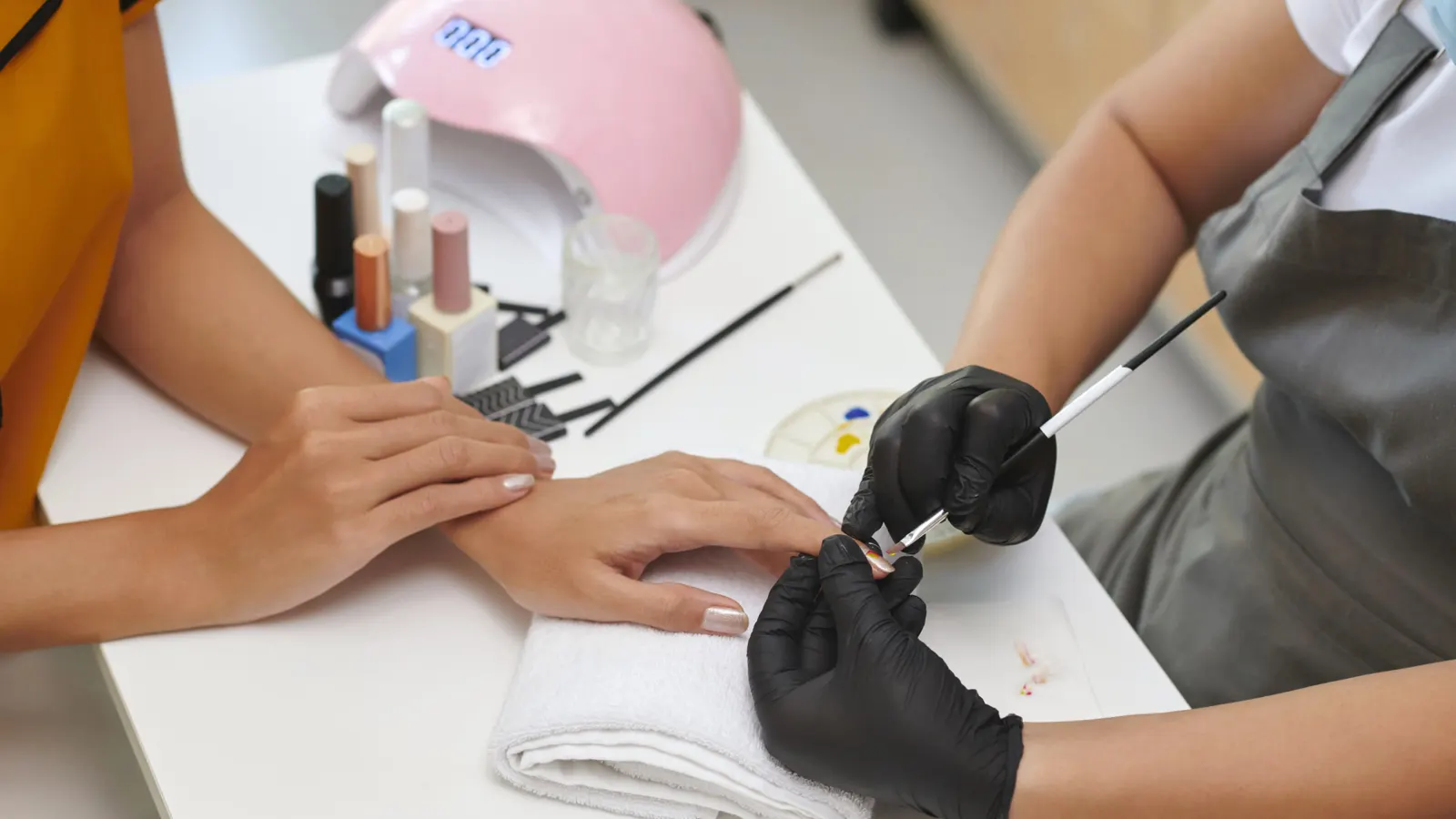
- Commonly quoted salon net margins: about 5–15%
- A 5% price rise lifted our example from 11% to 13.5%
- 20% off the price can mean 50% off the profit
Your salon profit margin is the share of revenue you keep after all costs. Commonly quoted figures for salons range from about 5% to 15% net profit, and many busy salons sit at the low end. The good news: small changes to prices, discounts and pay models move the margin quickly.
Gross margin vs net profit margin
- Gross (contribution) margin: what is left after products, commission and card fees. It shows how profitable each sale is.
- Net profit margin: what is left after fixed costs too (rent, salaries, software). This is the number that matters.
Example: a salon with $15,000 revenue
| Per month | % of revenue | |
|---|---|---|
| Revenue | $15,000 | 100% |
| Products | −$1,800 | 12% |
| Commission (35%) | −$5,250 | 35% |
| Card fees | −$300 | 2% |
| Fixed costs | −$6,000 | 40% |
| Net profit | $1,650 | 11% |
Contribution margin per treatment
The salon margin is an average of all your treatments, and they are not equal. With 35% commission and 2% card fees, each treatment keeps 63% of its price before products:
| Treatment | Price | Products | Left after variable costs | Contribution margin |
|---|---|---|---|---|
| Gel manicure | $40 | $3 | $22.20 | 55.5% |
| Brow lamination | $55 | $4 | $30.65 | 55.7% |
| Hydrafacial | $98 | $30 | $31.74 | 32.4% |
Example numbers. Left = price × 0.63 − products.
Product-heavy treatments have a much lower margin, even when their price looks high. A salon that sells more of them needs higher prices or a lower commission on those services. Then compare what each treatment leaves per hour, because time is the other half of the story. With $15 of overhead per booked hour, the 60-minute hydrafacial leaves $16.74 for its hour, while a 45-minute brow lamination leaves $19.40, or about $25.87 an hour.
Lever 1: Raise prices by 5%
A 5% price rise adds $750 of revenue. After 35% commission and 2% card fees, $472 stays with the salon, so profit grows from $1,650 to about $2,122 and the margin from 11% to 13.5%, without one extra client. Even if you lose a few clients, you often still earn more.
Test it before you change a single price: the what-if simulator in the free demo shows how a price rise, a discount or fewer clients changes an example salon's monthly profit.
Test discounts and fewer clients too in the free demo's what-if simulator →
Lever 2: Stop untested discounts
On a $50 service with $30 of direct costs, a 20% discount leaves $10 instead of $20: 20% off the price is 50% off your profit. Test promotions before you run them.
Lever 3: Raise the services that earn least per hour
Rank your treatments by profit per hour. The bottom ones fill your calendar but drag your margin down. Raise them first or shorten them. Our pricing guides for nails, lashes and facials show how.
Lever 4: Check your pay models
For busy team members, a salary or hybrid model can cost less than commission. See commission vs salary.
Lever 5: Cut product waste
Product is often 10–15% of revenue. Cutting waste by 10% in this example adds $180 a month straight to profit.
Example 2: a solo beauty salon and the owner's pay
A one-person beauty salon has no commission to pay, so its margin can look huge. Here is a solo esthetician with $8,000 of monthly revenue:
| Per month | % of revenue | |
|---|---|---|
| Revenue | $8,000 | 100% |
| Products | −$800 | 10% |
| Card fees | −$240 | 3% |
| Rent and other fixed costs | −$1,800 | 22.5% |
| Owner's pay | −$3,500 | 43.75% |
| Net profit | $1,660 | 20.75% |
Without the owner's pay the "profit" would be $5,160, a 64.5% margin. That number is not wrong, but it mixes two things: the owner's wage for their work, and the profit the business makes on top. Only the second one pays for slow months, new equipment and growth. Always put your own pay in as a cost, at the wage you would have to pay someone else to do your job.
A 15-minute monthly margin check
- Write down revenue for the month, without tips.
- Add up variable costs: products, commission and card fees. Divide by revenue to get your variable cost percentage.
- Add up fixed costs, including your own pay and a twelfth of any yearly bills.
- Calculate net profit and margin. Compare it with last month and the same month last year.
- Pick one lever from the list above and test it for the next month.
If your margin keeps falling while the calendar stays full, your prices have not kept up with your costs. Our guide to raising salon prices shows how much room you have.
Frequently asked questions
What is a good profit margin for a beauty salon?
Commonly quoted net profit margins for salons are roughly 5–15%. Above 15% is strong; below 5% leaves little room for a slow month. Make sure your own wage is counted as a cost.
How do I calculate my salon profit margin?
Subtract all costs (products, commission, card fees, rent, salaries and other fixed costs) from revenue, then divide by revenue. $1,650 profit on $15,000 revenue is an 11% margin.
What is the fastest way to increase salon profit?
Usually a small price increase on the services that earn the least per hour, because almost all of it goes to profit. Cutting untested discounts is a close second.
Why is my salon busy but not profitable?
Usually because some popular treatments are priced below what they cost once commission, products, card fees and overhead are counted, or because discounts and free extras have crept in. Rank your treatments by profit per hour to find the leak.
Should a salon owner count their own wage as a cost?
Yes. Count your pay as a fixed cost at a fair wage for the work you do. Otherwise your profit margin mixes your wage with business profit and looks much better than it really is.
Does selling retail products improve salon profit margin?
It can, if retail is priced with a healthy markup and does not sit on the shelf. Count the cost of the products, any retail commission and stock you cannot sell. Retail that moves slowly ties up cash and can lower your real margin.
What is the difference between markup and margin?
Markup is profit as a share of cost; margin is profit as a share of the price. A product bought for $10 and sold for $20 has a 100% markup but a 50% margin. Salon profit margins are always calculated on revenue, so use margin when you compare.
Why does my salon margin fall when we get busier?
If the extra bookings come from discounted or low-priced treatments, each one adds more cost than profit. More team hours, overtime and product waste can also grow faster than sales. Check which treatments the extra bookings were for.
How much does the commission rate change my salon margin?
A lot. On $15,000 of monthly revenue, every 5 points of commission is $750 a month. Moving from 40% to 35% commission, or adding a product charge, can lift the net margin by several points.
How often should I check my salon profit margin?
Every month, using the same method each time. Comparing one month with the previous one and with the same month last year shows trends that a single number hides.

Simple numbers for beauty businesses: pricing, profit and team pay, explained with real examples. More about us. Follow @salonprofitlab on Instagram for weekly tips.
This guide uses example numbers for illustration. It is not accounting, tax or financial advice.